Understanding how rivets work is essential for anyone involved in manufacturing, construction, aerospace, automotive production, sheet metal fabrication, or industrial engineering. Rivets are permanent mechanical fasteners designed to securely join two or more materials together without relying on threads or adhesives. Their simple design, combined with exceptional strength and reliability, has made rivets one of the most widely used fastening methods across countless industries.
Unlike screws and bolts that can loosen or be removed over time, rivets create a permanent joint that resists vibration, heavy loads, and harsh environmental conditions. From aircraft fuselages and steel bridges to household appliances and automotive body panels, rivets continue to provide dependable fastening solutions where safety and durability are critical. Learning how rivets work also helps engineers, manufacturers, and DIY enthusiasts choose the right fastening method for different applications while understanding related concepts such as permanent fasteners, blind rivets, solid rivets, sheet metal fastening, industrial rivets, structural joints, and mechanical fastening systems.
Rivet Working Process in Permanent Fastening
To understand how rivets work, it is important to know the basic structure of a rivet. A standard rivet consists of a smooth cylindrical shaft and a pre-formed head. During installation, the rivet is inserted through aligned holes in the materials that need to be joined. Once positioned, force is applied to the opposite end of the rivet, causing the shaft to deform and expand. This deformation creates a second head, often called the shop head, which securely clamps the materials together.
The permanent joint formed during this process prevents the rivet from pulling out under normal operating conditions. Unlike threaded fasteners, rivets distribute pressure evenly across the connected materials, reducing the likelihood of loosening due to vibration or repeated movement. This is one of the primary reasons rivets are widely used in aircraft structures, bridges, railway systems, heavy machinery, and transportation equipment.
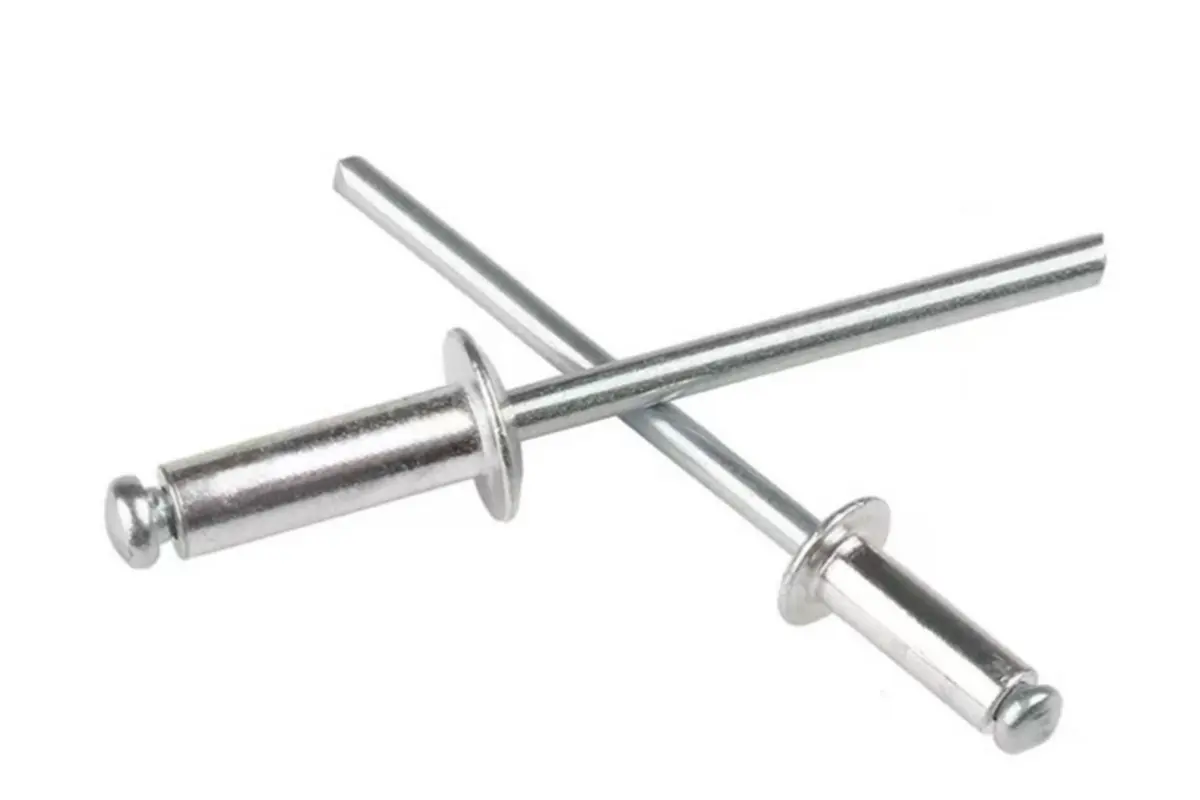
Different installation methods are used depending on the rivet type. Solid rivets require access to both sides of the assembly and are typically installed using pneumatic hammers or hydraulic riveting equipment. Blind rivets, often known as pop rivets, are installed from one side only. A specialized rivet gun pulls a mandrel through the rivet body, causing it to expand behind the material before the mandrel breaks away, leaving a secure permanent connection.
This simple but highly effective fastening principle allows rivets to create joints that remain stable even under constant vibration, mechanical stress, and changing environmental conditions.
Rivet Types and Their Working Applications
Understanding how rivets work also involves recognizing that different rivet designs serve different purposes. Solid rivets are widely regarded as the strongest permanent fasteners and are commonly found in aerospace engineering, structural steel construction, shipbuilding, and heavy industrial machinery. Their excellent resistance to shear and tensile forces makes them ideal for critical structural applications.
Blind rivets are designed for situations where only one side of the material can be reached during installation. Their convenience has made them popular in automotive repairs, HVAC systems, roofing panels, aluminum fabrication, electrical enclosures, trailers, and household equipment. They provide strong fastening while significantly reducing installation time.
Tubular rivets contain a partially hollow end that requires less installation force, making them suitable for leather goods, furniture, luggage, footwear, packaging, and lightweight assemblies. Semi-tubular rivets offer additional strength and are commonly used in hinges, mechanical linkages, brake systems, and moving equipment.
Flush rivets create a smooth finished surface after installation, making them especially valuable in aircraft manufacturing where minimizing aerodynamic drag is essential. Split rivets are commonly used with softer materials such as wood, leather, plastic, and fiberboard because their divided legs spread during installation to create a secure grip without damaging the material.
Threaded rivets, also known as rivet nuts, provide strong internal threads in thin sheet metal where traditional tapping is impractical. These fasteners are frequently installed in industrial equipment, machinery, automotive manufacturing, and metal fabrication projects that require removable threaded connections after installation.
Materials and Performance Behind Rivet Strength
A complete understanding of how rivets work also requires knowledge of rivet materials. Aluminum rivets are lightweight, corrosion-resistant, and easy to install, making them ideal for aircraft interiors, trailers, marine equipment, electronics, and general sheet metal fabrication. Their excellent strength-to-weight ratio makes them one of the most commonly used fastening solutions.
Steel rivets provide exceptional mechanical strength and are widely used in heavy construction, structural steel fabrication, railway systems, mining equipment, and industrial machinery where maximum load capacity is required. Stainless steel rivets combine high strength with outstanding resistance to corrosion, making them suitable for marine engineering, food processing equipment, chemical plants, pharmaceutical manufacturing, and outdoor construction exposed to moisture.
Copper rivets offer excellent corrosion resistance together with superior electrical conductivity, making them valuable forelectrical equipment, roofing systems, decorative architecture, and leather products. Brass rivets provide both durability and an attractive appearance, making them popular in furniture manufacturing, decorative metalwork, marine hardware, and luxury leather accessories.
Selecting the proper rivet material depends on operating conditions, mechanical loads, environmental exposure, corrosion risks, and compatibility with surrounding materials. Using the correct material ensures that the rivet maintains its strength and reliability throughout the life of the product.
Conclusion
Understanding how rivets work provides valuable insight into one of the most reliable fastening methods used across modern industries. By permanently deforming the rivet during installation, a secure mechanical joint is created that withstands vibration, heavy loads, and challenging environmental conditions far better than many removable fasteners.
Whether using solid rivets for structural applications, blind rivets for convenient installation, tubular rivets for lightweight assemblies, or threaded rivets for thin sheet metal, each fastening solution is designed to meet specific engineering requirements. Combined with materials such as aluminum, steel, stainless steel, copper, and brass, rivets continue to deliver outstanding performance across aerospace, automotive, construction, manufacturing, and industrial sectors.
As engineering and manufacturing technologies continue to evolve, rivets remain an essential component for creating strong, dependable, and long-lasting mechanical joints. A thorough understanding of how rivets work helps manufacturers, engineers, fabricators, and technicians select the most effective fastening solution, improve product quality, enhance structural safety, and ensure reliable performance for years to come.